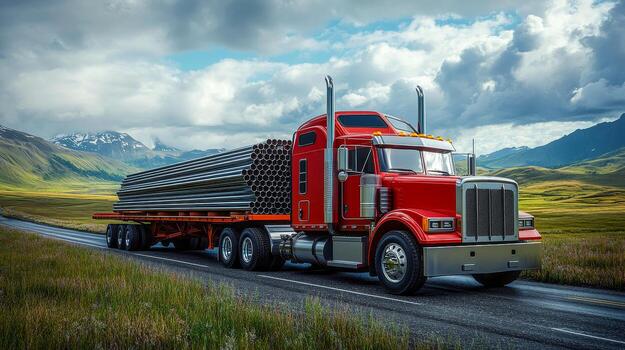
If your Texas hot shot rig (truck plus trailer) is rated above 10,001 lbs GVWR and you cross state lines for hire, you need FMCSA authority and $750,000 in primary liability — federal minimum. In practice, every load board and broker pushes you to $1M liability and at least $100K motor truck cargo. Beyond that, the four coverages that owner-operators most often skip or under-buy are physical damage on the trailer, trailer interchange, non-trucking liability (NTL/bobtail), and cargo limits that don't actually match what brokers require. Typical 2026 annual premium for a single-truck operator: $7,000-$14,000 depending on authority age, MVR, and equipment.
The 10,001 lb GVWR line that changes everything
The single most important number for any Texas hot shot operation is your Gross Vehicle Weight Rating (single truck) or Gross Combination Weight Rating (truck + trailer). The moment that number crosses 10,001 lbs and you're hauling for compensation across state lines, you're a federally regulated motor carrier under FMCSA jurisdiction.
Practical translation for the typical hot shot setup:
- A Ram 3500 dually (GVWR ~12,500 lbs) — already past the threshold by itself.
- A Ford F-450 (GVWR ~14,000-16,500 lbs) — well past.
- A 40-foot gooseneck trailer rated for 25,000 lbs — pushes your combination rating to 35,000-40,000 lbs depending on the truck.
If any of those describe your rig, you are a federally regulated for-hire motor carrier the moment you take money for a load that crosses a state line. There is no "small operator" exemption. The size of your operation is irrelevant — what matters is the GVWR/GCWR rating on the door jamb and whether you're hauling for compensation.
If you stay entirely within Texas, intra-state rules under Texas Administrative Code Title 43, Chapter 218 apply instead — which still require commercial auto insurance, but at lower limits and without FMCSA authority. The catch: most hot shot loads are interstate, and one Louisiana run flips you into federal jurisdiction. Brokers will not tender interstate loads to a carrier without FMCSA authority on file.
The $750K FMCSA floor — and why it's effectively $1M
Federal regulation 49 CFR Part 387 sets the minimum primary liability for interstate motor carriers:
| Cargo Type | FMCSA Minimum Liability |
|---|---|
| Non-hazardous general freight | $750,000 |
| Oil-related hazardous (Class 3, Div 6.1, 8) | $1,000,000 |
| Hazardous materials (most classes) | $5,000,000 |
So technically, a Texas hot shot operator hauling pipe, equipment, or general freight only needs $750K. The $750K number hasn't moved since 1985, which means in 2026 dollars it covers about a third of what it did when the rule was written. The market has reacted accordingly.
What we see when we run quotes for new Texas hot shot operations:
- Almost every broker on DAT, Truckstop, and direct shipper contracts requires $1 million.
- Oilfield, energy, and industrial loads frequently require $1M + $1M umbrella, sometimes $2M.
- Auto transport brokers can require $1M liability plus on-hook coverage that's effectively automotive cargo insurance.
- Refrigerated or temperature-sensitive freight requires either a reefer endorsement on cargo or a separate reefer breakdown policy.
Carrying only the $750K federal floor is technically legal but will cut you off from a large slice of the load board. The math is straightforward: stepping up from $750K to $1M typically costs an extra $500-$1,500/year and opens up substantially more freight.
The five coverages on a real Texas hot shot policy
"Hot shot insurance" isn't a single product — it's a stack of five coverages, only one of which is legally required. The other four are required by brokers, shippers, or simple risk reality. Here's what's on a typical Texas hot shot policy and what each one actually does.
1. Primary commercial auto liability ($750K-$1M required)
This is the only legally required coverage. It pays when you cause bodily injury or property damage to another party — the other driver, their vehicle, fences, signs, cargo on the other truck. It does NOT pay for damage to your truck, your trailer, or the load you're hauling. Premium impact: about 50-60% of total policy cost.
2. Physical damage (truck and trailer)
Covers damage to your own equipment from collisions, rollovers, fire, theft, and weather. Most hot shot truck loans require it. The number we see most often missed: physical damage on the trailer itself. A $25K gooseneck flat-deck trailer is often left uninsured because the owner thinks "the truck's coverage covers it." It doesn't. The trailer needs a separate listed item under physical damage. Premium impact: 15-25% of total policy.
3. Motor truck cargo (typically $100K, sometimes $250K)
Covers loss or damage to freight you're hauling. Not legally required, but every broker requires it. The market standard is $100,000 with a $1,000 deductible. For higher-value loads (machinery, oilfield equipment, autos) brokers commonly require $250K or more. This is also where commodity exclusions matter — most standard cargo policies exclude live animals, jewelry, fine art, hazardous materials, and refrigerated goods unless specifically endorsed. Insureon's 2025 industry benchmarks show $100K limits as the most common base. Premium impact: 10-15% of policy.
4. Non-trucking liability / bobtail ($300-$700/year)
Covers liability when you're driving the truck for non-business use — typically running empty home after a delivery, picking up groceries with the truck, weekend driving. Standard commercial auto excludes personal use; NTL fills that gap. Cheap, easy to add, and the cause of more than one denied claim we've seen. Premium impact: minimal but consequential.
5. Trailer interchange / non-owned trailer ($20K-$50K limit)
Required when you ever haul a trailer that isn't yours — a customer's gooseneck, a leased trailer, or a trailer assigned to you by a brokered shipper. Standard physical damage covers only trailers you own. If a customer hands you their trailer and a tire blows out, gouging the deck, you're responsible. Trailer interchange covers that. Premium impact: $200-$500/year if you carry it.
Typical 2026 cost ranges for Texas hot shot operators
What you'll actually pay depends on five things: authority age, MVR (CDL driving record), equipment age and type, cargo type, and operating radius. The table below reflects what we see across new Texas hot shot quotes in early 2026, drawing on FMCSA registration data and industry benchmarks published by Insureon and TruckInfo.net.
| Operator Profile | Liability ($1M) | Physical Damage | Cargo + NTL + Interchange | Total Annual |
|---|---|---|---|---|
| 2+ year authority, clean MVR, paid-off truck | $4,800 | $1,800 | $1,200 | ~$7,800 |
| 1-2 year authority, clean MVR, financed truck | $5,800 | $2,400 | $1,400 | ~$9,600 |
| New authority (under 12 months), clean MVR | $7,200 | $2,400 | $1,400 | ~$11,000 |
| 2+ year authority, 1 prior accident/ticket | $6,500 | $2,200 | $1,400 | ~$10,100 |
| New authority + hazmat or oilfield freight | $10,000 | $2,400 | $1,600 | ~$14,000 |
Figures are illustrative ranges based on Texas-domiciled single-truck operations hauling within a 1,000-mile radius. Actual premium varies by carrier, deductible, claims history, and operating territory. We re-quote every Intac trucking client annually.
The four gaps we find on almost every Texas hot shot policy
When a new client sends us their existing policy for a second-opinion review, the same four gaps come up over and over. None of these are obscure — they're standard hot shot exposures that get missed because either the previous agent wasn't a trucking specialist, or the operator chose the cheapest quote on a load board ad.
Gap 1: Cargo limits below broker requirements
Operator buys $50K cargo because it was cheaper. Broker requires $100K. Either the load gets pulled at dispatch (lost revenue) or the operator hauls it anyway and lies on the carrier packet (lost insurance the moment something goes wrong). Fix: always carry at least $100K cargo, and look at the freight you're typically hauling — a $250K limit is often only $200-$400/year more.
Gap 2: No non-trucking liability when bobtailing
Operator drives the truck home after a Friday delivery, runs errands Saturday in the truck, gets in a fender-bender on Sunday. Commercial auto excludes personal use. NTL would have covered it. NTL costs ~$400/year. Fix: NTL is non-optional if you ever drive the truck for personal reasons.
Gap 3: Trailer physical damage forgotten
Truck is insured for $80,000. Trailer is sitting in the yard, owner thinks it's "implied" coverage. Trailer gets hit by another truck in a parking lot. Insurance covers $0. Fix: list every owned trailer separately on the physical damage schedule, even if it's worth only $15K.
Gap 4: Missing trailer interchange when hauling brokered or customer trailers
Operator picks up a brokered trailer at a yard, hauls it 800 miles, returns it scratched. Broker bills the operator for $8,000 in deck repair. Operator's commercial auto excludes damage to non-owned equipment. No trailer interchange = operator pays out of pocket. Fix: if you ever haul a trailer you don't own, you need trailer interchange or a non-owned trailer endorsement.
The "decline the load" decision framework
Sometimes the answer isn't more insurance — it's declining the load. Here's the four-question framework we walk new hot shot operators through:
- Does my cargo limit match what the broker requires? If broker requires $250K and you have $100K, either decline or pay to bump cargo (which usually only makes sense if it's a repeat lane).
- Does this load include excluded commodities? Hazmat, alcohol, refrigerated, autos, jewelry, fine art — all commonly excluded on standard cargo policies. Check before you bid.
- Am I hauling a trailer I don't own? If yes, do you have trailer interchange? If no, decline.
- Does the load cross into a state where I don't have authority filed? Some states (most notably California for hazmat) have additional filings beyond standard FMCSA. Check the route before you sign.
The right answer to a brokered load is sometimes "no thanks." A $1,200 dispatch with $40,000 of uninsured cargo exposure is bad math no matter how empty next week looks.
The trucking insurance market shifts every 12-18 months. Carriers that were aggressive on hot shot in 2024 may have tightened in 2025 after losses. As an independent agency, we quote your renewal across the carriers actively writing hot shot in Texas — not just the one that wrote you last year. We typically see a 10-30% improvement on second-year renewals just from re-shopping the same coverage with the same limits.
Why Texas hot shot rates differ from long-haul Class 8
Operators stepping into hot shot from a Class 8 background often expect a steep discount. The reality is more nuanced. Hot shot trucks (Class 3-5, 10,001-26,000 lbs) carry less cargo, run shorter loads on average, and have lower potential damages per accident than a fully-loaded 80,000-lb tractor-trailer.
But the underwriting math is offset by three factors specific to hot shot:
- Newer authorities. Most hot shot operators are first- or second-year MC numbers. FMCSA data shows new-authority carriers have substantially higher first-year accident rates.
- Multi-state operations. Hot shot loads often hit 2-4 states in a single dispatch. Each state has its own filings, surcharges, and minimum financial responsibility rules.
- Owner-operator dynamics. Hot shot is overwhelmingly a 1-truck operation, which means no fleet credibility, no safety program, no DOT compliance officer. Carriers price for that.
Net result: hot shot premiums typically run 60-80% of comparable Class 8 long-haul rates for the same authority age and MVR profile, not the 30-40% discount many new operators expect from the smaller equipment.
The honest take from an independent Texas agency
We see a lot of hot shot policies. Three patterns repeat:
- The cheapest quote on the load board is rarely the right policy. Online quote tools sell at the $750K floor with $50K cargo and no NTL. The broker requirements catch up by month two.
- Year-one premiums are the most expensive year you'll have. If you make it to month 13 with no accidents and a clean MVR, year two is usually 15-30% cheaper across the entire policy. Stick with it.
- Most operators are over-deductible-ed on physical damage. A $5,000 collision deductible saves $300/year in premium but is unaffordable for most owner-operators when a fender-bender happens. The $2,500 deductible is usually the sweet spot.
Send your existing policy or your current carrier's quote. We'll come back inside two business days with: (1) what the actual broker-required minimums look like for your typical lanes, (2) where your coverage has gaps you didn't know about, and (3) a re-quote from the carriers actively writing hot shot in Texas right now. No obligation. Email us or call (877) 237-8167.